JOWETT VEHICLES: 1940 – 1954
JOWETT BRADFORD
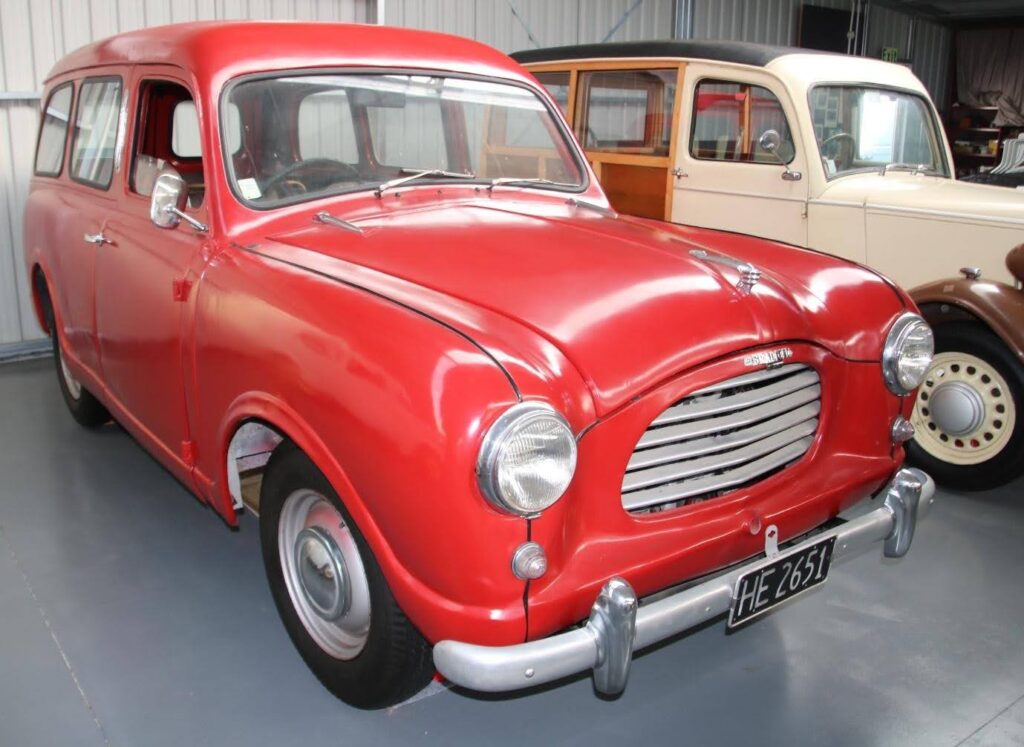
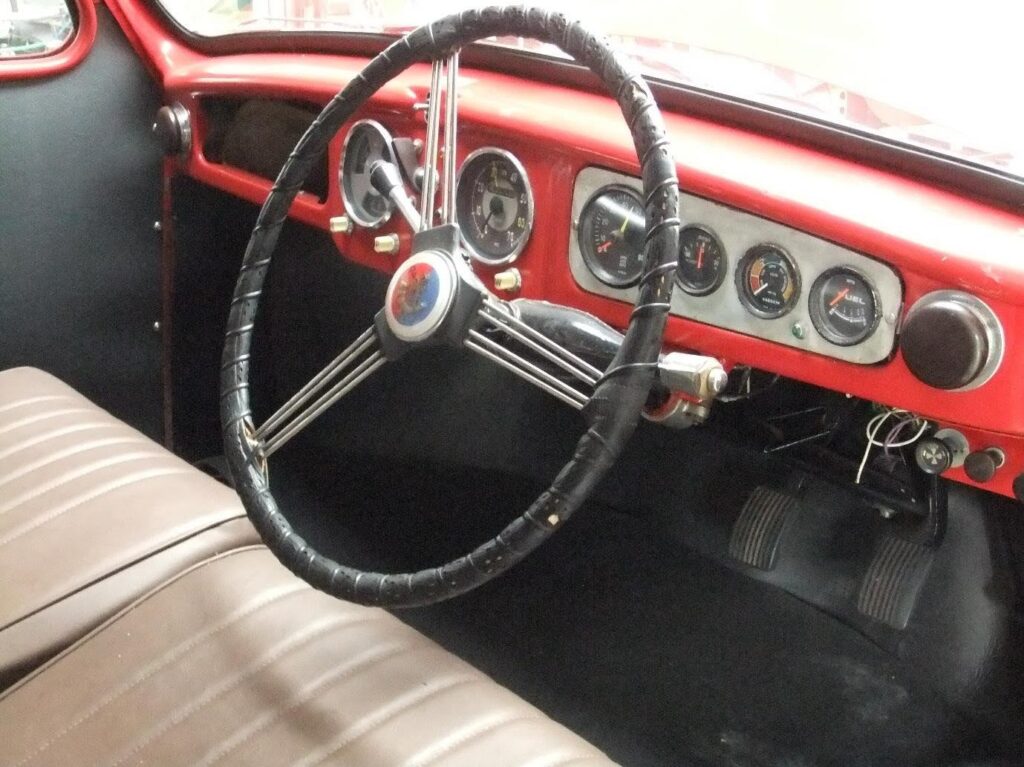
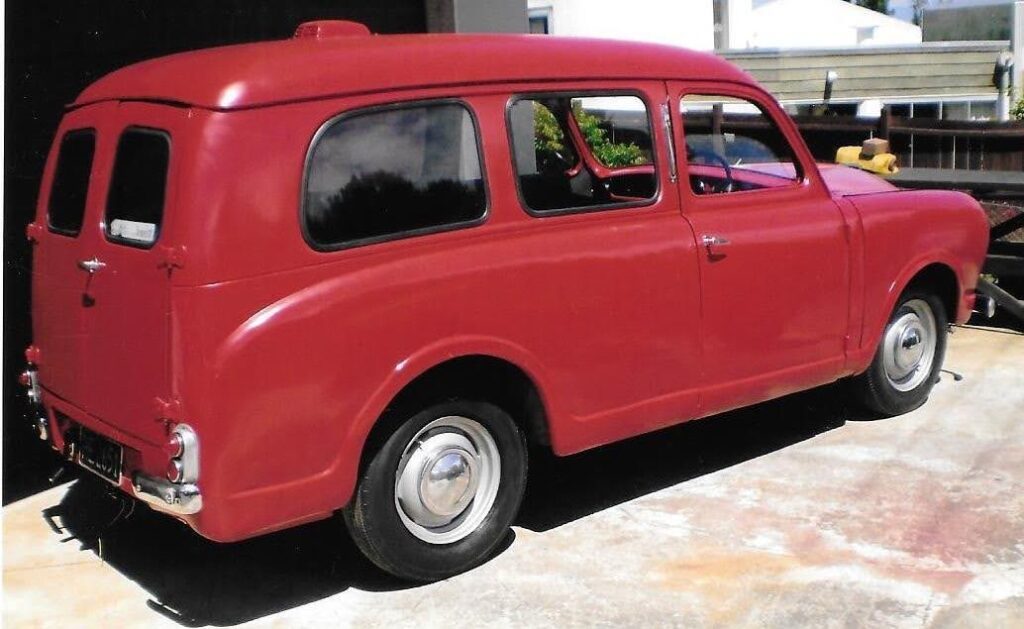
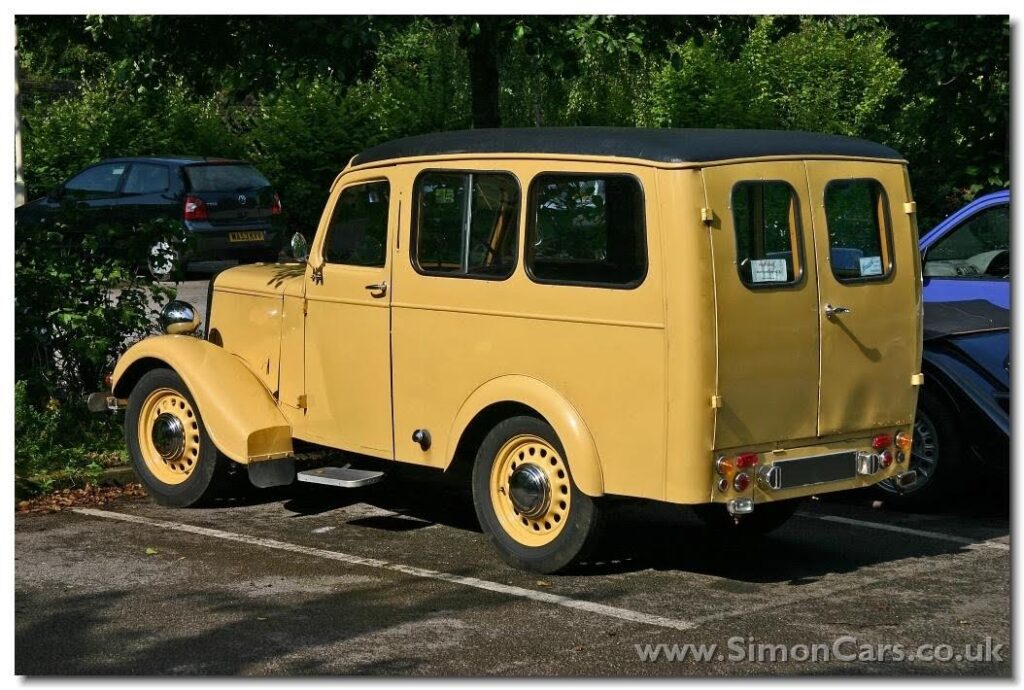
- The Jowett Bradford was a British light van produced from 1946 to 1953 by Jowett Cars Ltd of Idle, near Bradford England. From 1947 to 1953 it was also available as an estate car.
- The Bradford was based on the pre-war Jowett Eight being the first Jowett re-introduced after the 2nd World War. Whilst very basic, the Bradford was economical and well suited to the post-war market.
- 38,241 vehicles were made between 1946 and 1953
- Design features:
- The chassis features half-elliptic leaf springs front and rear beam axles
- The front-mounted side valve flat-twin engine, 1005 cc producing 19 bhp (14 kW) and drove the rear wheels through a 3 speed non-synchromesh gearbox.
- In 1950 the engine was updated to give 25 bhp (19 kW) and synchromesh was fitted to the top ratio. This improved the top speed to 53 mph (85 km/h).
- 3 model series were produced – CA (1946) CB (Nov 1947) and CC (1949)
- It has 10 in (254 mm) drum brakes which operate mechanically using a Girling system.
- Body variants
- Initially a 10 cwt van version was made, followed by an estate car (little more than a van with side windows and rear seat) and in 1951 the Utility in two versions – Utility and De Luxe.
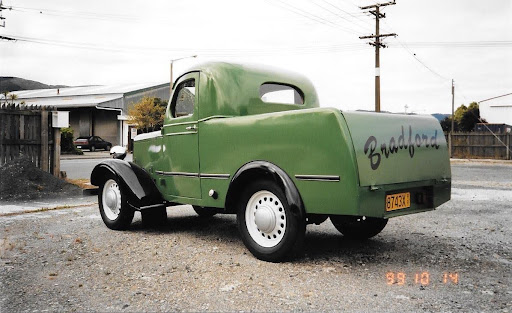
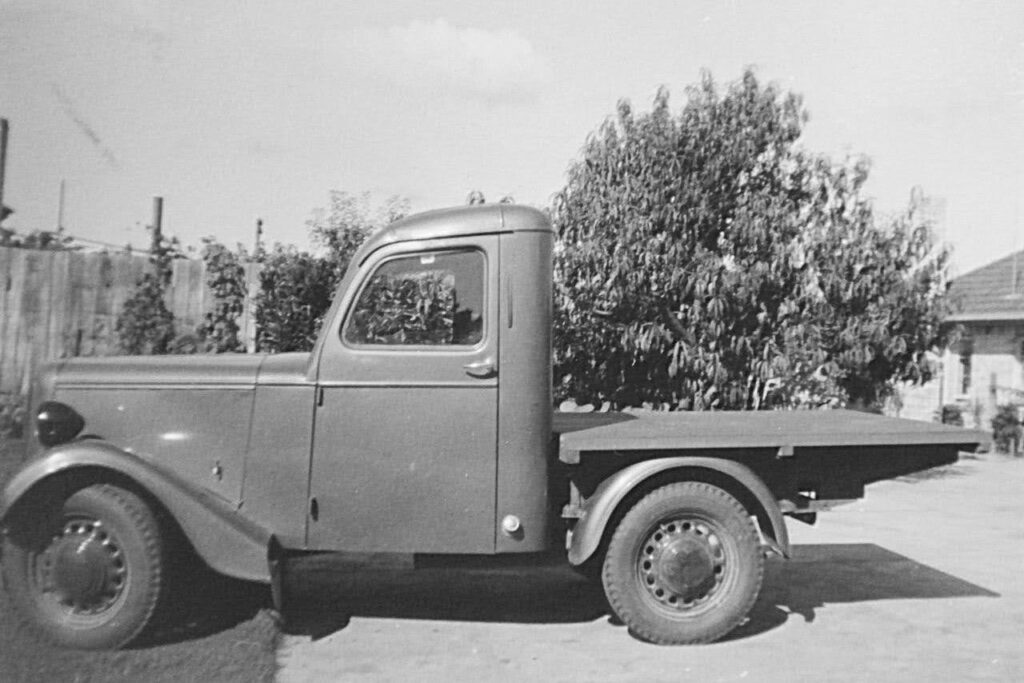
- To avoid the high UK purchase tax on private cars, both Utilities were offered as a 4-light van with windows but no rear seats. The Bradford was also manufactured as a light lorry.
- Driveaway cab-chassis versions were made and shipped from the UK for the local agent’s to build custom made bodies. These are the majority of the Bradford’s here in NZ.
- Dimensions
- Wheelbase 90 in (2,286 mm)
- Length 144 in (3656 mm)
- Width 60 in (1,524 mm)
- Height 69 in (1,753 mm)
- Performance
- The Utility de-luxe tested by the British magazine The Motor in 1952 had a top speed of 53.4 mph (85.9 km/h) and could accelerate from 0-50 mph (80 km/h) in 47.6 seconds. A fuel consumption of 34.5 miles per imperial gallon (8.2 L/100 km; 28.7 mpg) was recorded.
- The test car cost £740 including taxes. The de-luxe specification, which included trafficators, dual windscreen wipers, running boards, a rear bumper and some chromium plating added £38 to the total cost.
- Developments
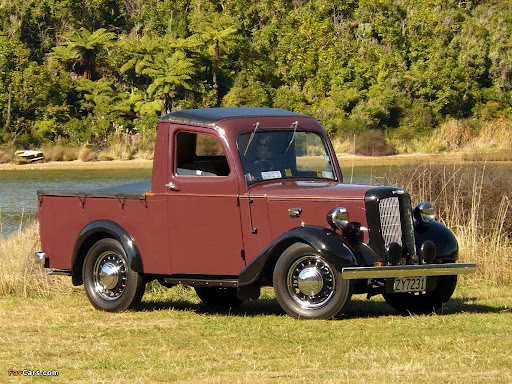
- A saloon and a pickup with inlet-over-exhaust cylinder heads was being developed when Jowett stopped making cars and vans. (see the CD Bradford details)
JOWETT JAVELIN
- Produced from November 1947 to 1953 by Jowett Cars Ltd of Idle, near Bradford in England.
- 23,307 cars made, costing £819 at time of their launch.
- Five variants coded PA to PE, with each having a standard and deluxe option
- Assembled in Great Britain, Australia & (Turners) Auckland.
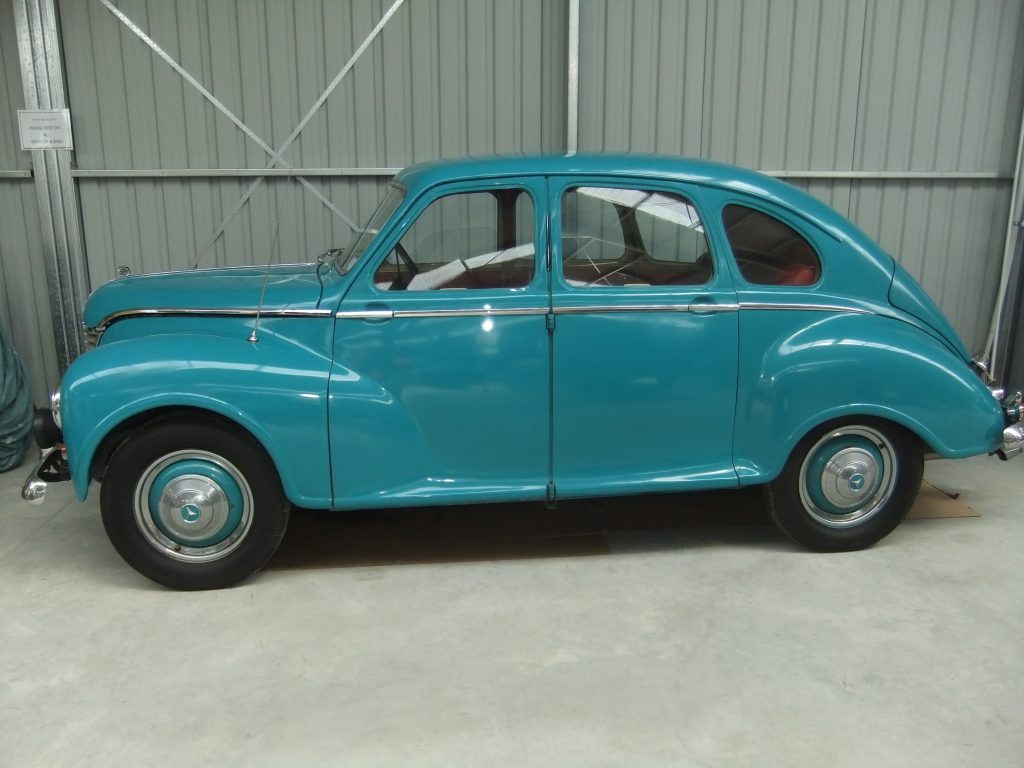
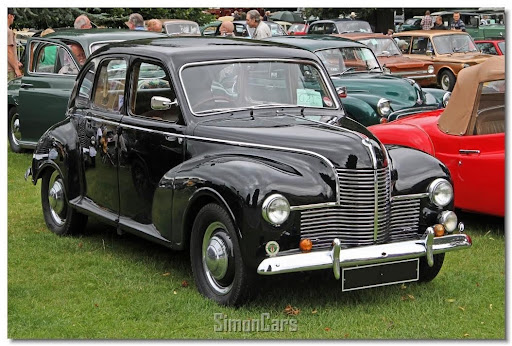
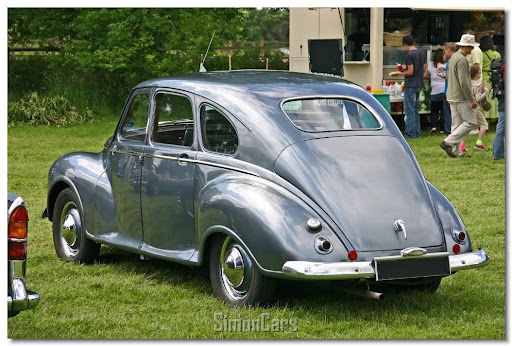
- Designed by Gerald Palmer during World War II and was intended to be a major leap forward from the relatively staid designs of the pre-war Jowetts.
- Body style is an all steel 4 door fast back saloon. Seating for 6 persons
- Engine is Jowett flat four, 1486cc with a compression ratio of 7.2:1 mounted ahead of the front axle. The radiator is behind the engine. It is water cooled with an aluminium block and wet cylinder liners.
- The engine develops 50 bhp (37 kW) at 3100 rpm (52.5 bhp in the case of the PE model) giving the car a maximum speed of 77 mph (124 km/h) and a 0-50 mph (80 km/h) time of 13.4 seconds. Engine weight is 2250 lbs (1021 kg)
- Two Zenith carburettors were fitted and the PA and PB have hydraulic tappets
- A 1949 road test report in The Times noted “that excellent acceleration with the moderate engine size, car’s light weight and good streamlining all contributing to its excellent performance. With controls being all light to operate and it was a restful car to drive”.
- Transmission is 4 speed manual, column change. Synchromesh on top three
- Dimensions: Wheelbase 102 in (2,591 mm), Track 51 in (1,300 mm), Length 14 feet (4,267 mm), Width 60 in (1,524 mm), Height 61 in (1,549 mm), Curb weight 2120 lb (962 kg)
- Design features include:
- Aerodynamic styling
- Headlights faired into the wings
- Sloped and curved windscreen
- Body of pressed steel incorporating a box-section chassis made for Jowett by Briggs Motor Bodies at Doncaster.
- Torsion bar suspension on all wheels (independent at the front)
- Internal gear and pinion steering
- PA and PB models had mixed Girling hydraulic brakes at the front and mechanical braking at the rear. Later versions are fully hydraulic
- The 1953 Motor Magazine noted a deluxe version had a top speed of 82.4 mph (132.6 Km/h). A fuel consumption of 29.1 miles per imperial gallon (9.7 L/100 km) was recorded. This car cost £1207 including taxes.
- Javelin Sporting Achievements have included:
- Winner in its class, in the 1949 Monte Carlo Rally
- Winner of the 2 litre touring car class in the 1949 Belgian The Spa 24 hour race
- Winner of class in 1952 International RAC Rally (now called the Wales Rally of Great Britain), along with the “Best Closed Car” Award
- Outright Winner in 1953 of the Dutch International Tulip Rally
JOWETT JUPITER
-
- The Jowett Jupiter was produced by Jowett Cars Ltd of Idle, near Bradford, England to capitalise on the success in competitions of the Jowett Javelin. Jowett decided to use its power train in a sports car for export in the hope of increasing their inadequate steel allocation.
- Chassis’ only were displayed at the London Motor Show 28 September 1949 and the Geneva Motor Show 16 March 1950. The complete car for the first time in New York in April 1950.
- Design features
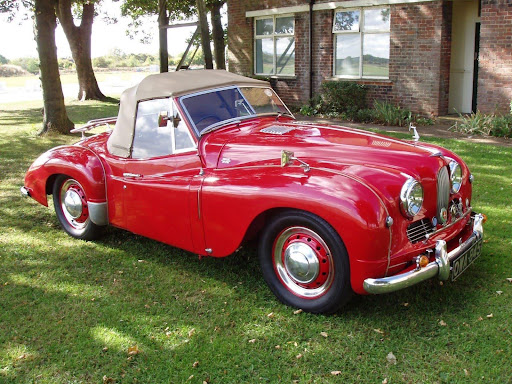
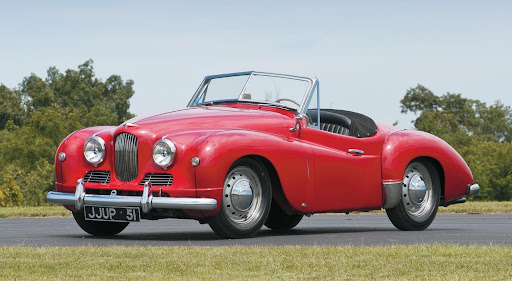
- 2 seater sports car, drop head coupe, wind up windows
- The Jupiter’s tubular steel chassis was developed by Eberan von Eberhorst. The suspension used soft torsion bars and anti-roll bars front and rear with independent suspension at the front. The engine was mounted very far forward ahead of the front axle line with the radiator low behind it over the gearbox. Adjustment of the anti-roll bars easily influenced oversteer and understeer to provide fine suspension tuning.
- On this torsional stiff frame Reg Korner of Jowett put a steel framed aluminium drophead coupé body with a bench seat for three people. Eberan’s chassis had been designed for a closed coupé and it proved to require strengthening. The anti-roll bars were abandoned. There was no external access to the boot (trunk) and the bonnet (hood) was rear hinged and opened complete with the wings. These cars were only for export
- An initial 75 chassis were supplied to external coachbuilders such as Stabilimenti Farina, Ghia, Suisse, Abbott of Farnham and others. The high cost of these bodies for a 1500cc car meant Jowett decided to build their own complete cars.
- Production: 1950 – 1954. The Jowett factory made 731 Mk1 and 94 Mk1a cars. The Mk 1a came out in late 1952 with a little more power (63 bhp) and an opening lid to a boot of larger capacity.
- Powertrain
- Jowett flat four overhead valve engine of 1486 cc (more highly tuned than the Javelin) and a compression ratio raised from 7.2:1 to 8.0:1 developing 60 bhp (45 kW) at 4500 rpm giving the car a maximum speed of 85 mph (137 km/h) and a 0-50 mph time of 11.7 seconds. Two Zenith carburettors were fitted.
- Transmission: Four speed manual gearbox with column change.
- Dimensions:
- Wheelbase 93 in (2,400 mm),
- Length Series 1 163 in (4,100 mm), Series 1a 168 in (4,300 mm),
- Width 62 in (1,600 mm),
- Height 56 in (1,400 mm).
- Curb weight 2,100 lb (953 kg)
- The Jupiter’s Motor Sport Success
- A record-breaking class win at the 1950 Le Mans 24 Hour race.
- A class one-two in the 1951 Monte Carlo International Rally.
- An outright win in the 1951 Lisbon International Rally
- A class one-two in a gruelling four-hour sports car race on the public road at Dundrod Circuit in Northern Ireland in September 1951. This was a resurrection of the famous Ulster Tourist Trophy races of 1928-1936 previously run on the 13.7-mile (22.0 km) Ards circuit.
- Le Mans was again class-won in 1951 and 1952, and lesser events were taken in 1952 but by 1953 newer faster cars were proving a match for the Jupiter which was after all a well-appointed touring car first and foremost.
- Performance and Driving
- The British magazine The Motor tested a car in 1950 which had a top speed of 86.1 mph (138.6 km/h) and could accelerate from 0-60 mph (97 km/h) in 18.0 seconds. A fuel consumption of 25.1 miles per imperial gallon (11.3 L/100 km; 20.9 mpg) was recorded.
- The test car cost £1086 including taxes.]At this time a Jaguar XK120 cost £1263 including taxes when tested by the same magazine.
- The Jupiter’s compression ratio of 8:1 was higher than on most UK market cars in 1950, and some mild pinging was recorded using 72 octane fuel, which was the highest grade normally available in Britain at the time. Other features drawing particular praise included quick, light though highly geared steering and gear change linkage which was “unusually positive for a steering column layout”.
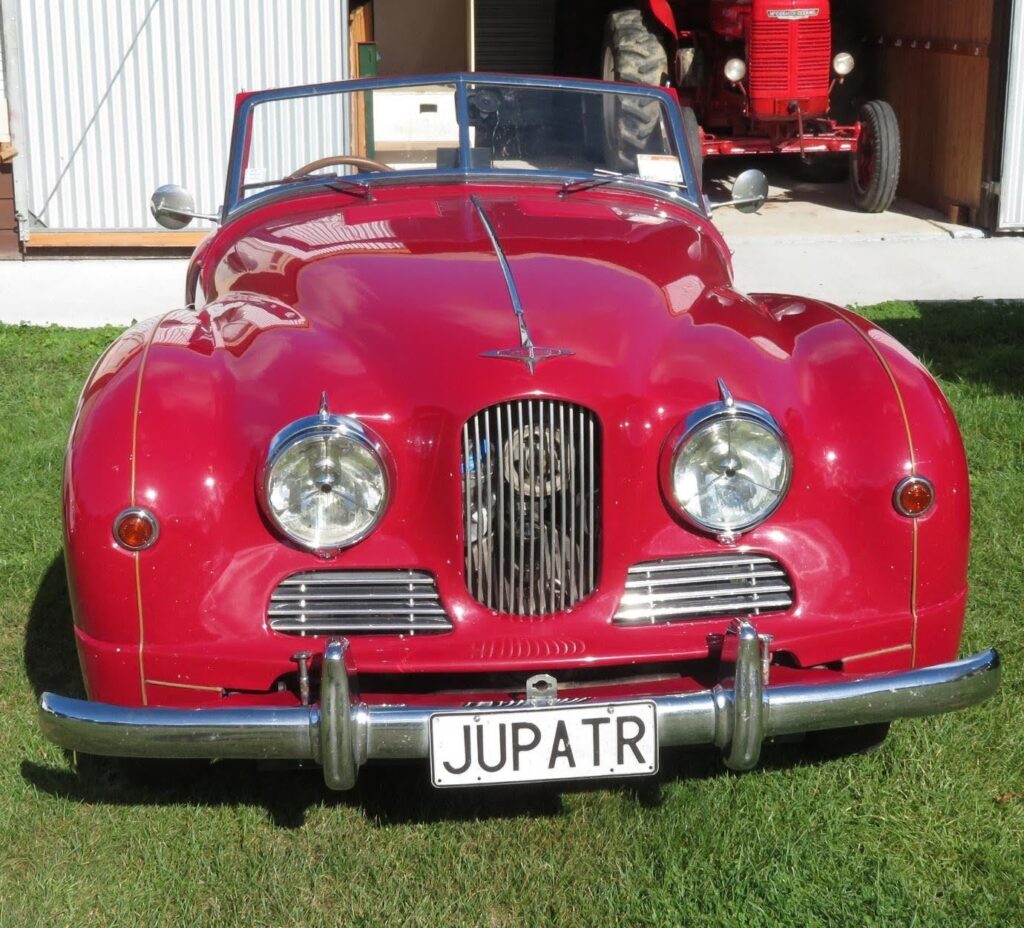
Jupiter R1
A racing derivative of the Jupiter, the R1, was entered in the 1951 1500 cc sports car race at Watkins Glen, driven to first place by George Weaver. In the 1952, 24 Hours of Le Mans, won its class at 13th overall, driven by Marcel Becquart and Gordon Wilkins. Three examples of the R1 were made.
Jupiter R4
The original Jupiter was a somewhat heavy car, and this handicapped its performance. An intended successor, the R4, was made with fibreglass body and a new lighter chassis and showed the potential of being a genuine 100 mph (161 km/h) car but Jowett closed before the car could reach production. Three prototypes were made.
Jowett Bradford CD – what the future might have held.
In 1950 Jowett produced a prototype of a car, and a fully redesigned commercial vehicle, based on the Jowett Bradford, it was code named CD. They planned to show it at the 1951 and 1952 motor shows. Unfortunately, the factory closed before the CD went into production, although there were a few prototypes made.
“Built for small business owners and savvy Yorkshire folks.”
Being economical, reliable and easy to maintain made the Jowett Bradford popular with small business owners of all types.
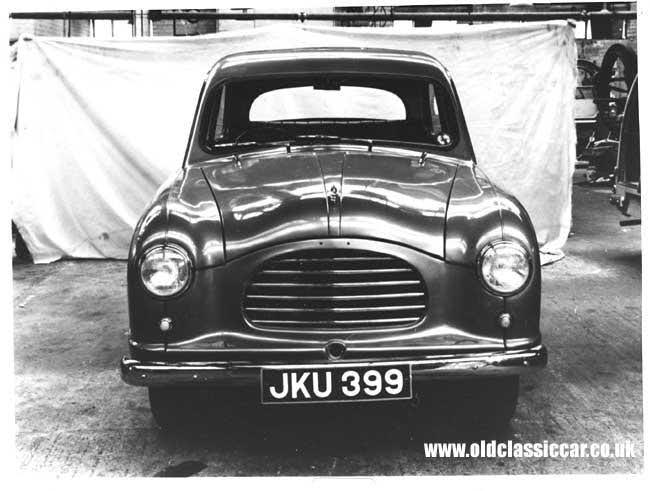
“The numberplate gives it away, JKU – Bradford, it was one of the 1953 prototype Jowett Bradford model CD’s, the only saloon finished in Jade Green metallic with bodywork by Brigg’s of Dagenham, two doors with sliding side windows. It had a separate chassis, and twin opposed engine, in the traditional Jowett manner. Also to be made as a pickup truck, van and estate car, the exact number of prototypes is said to vary between fourteen and eighteen, ten of these being ‘the pilot run off the tools’ which were either vans or estate cars.
About five examples of the “CD” were being used at one time by Jowett Engineering Ltd., as the firm then was—three pick-up trucks, a station-wagon and the saloon car.
The only survivor in the UK was CD10 [an estate car] which was used after Jowett’s demise by Blackburn Aircraft as a works hack.
Several were sold new to New Zealand where at least four have survived [all estates] CD 2, 11,17 and 18. CD 17 having the only known complete surviving new type twin engine developed for the range. They came here as deck cargo and rusted.
Two examples are registered with the Jowett Club of New Zealand, one of them— a station-wagon—being fitted from new with an R4 Jupiter engine. There is an example in New Zealand still fitted with the i.o.e. engine.