
JOWETT VEHICLES: 1904-1939
Benjamin (Ben) and William (Willie) Jowett started in the cycle business and went on to make V-twin engines for machinery. In 1904 the Jowetts formed the Jowett Motor Manufacturing Company, based in Bradford.
Benjamin Jowett saw that the light cars were powered by engines that were small, from cyclecars, or too large from bigger vehicles. Either way, the process was flawed, because cyclecar engines wore out too quickly and larger engines were too heavy for light-car frames and running gear.
The first tiller-steered, Jowett light car was produced in February 1906, making the prototype the United Kingdom’s first real light car. The Jowett engine was designed and built for a light car but the construction of the engine and the rest of the car was robust.
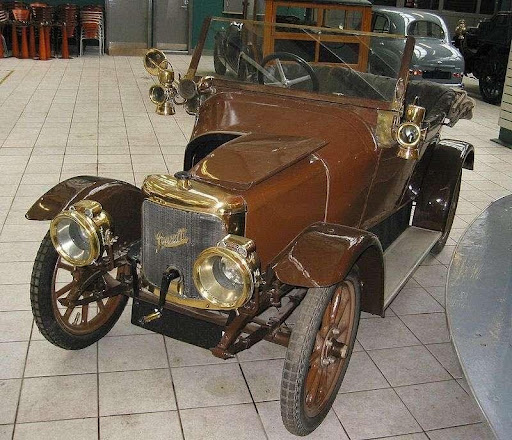
1914 Jowett – Buch T
As the small Jowett workshop was fully occupied with engineering activities, experiments of different engine configurations and making the first six Scott motorbikes for Alfred Angus Scott, the car did not go into production until 1910 and by then it had undergone 25,000 miles of exhaustive trials.
The first production car had an 816cc, flat twin, water-cooled engine of 6.4hp (RAC rating), with a three-speed gearbox. The body was a lightweight, open two-seater.
Jowett’s rationale was to make a lightweight vehicle at a low price and with low running costs. Engine and gearbox were specifically designed for a light car and made largely of aluminium. Its low-speed torque and gear ratios were ideally suited to the hills about
Bradford and Yorkshire’s terrain, where poor roads provided little use for a high-top speed or quick acceleration.
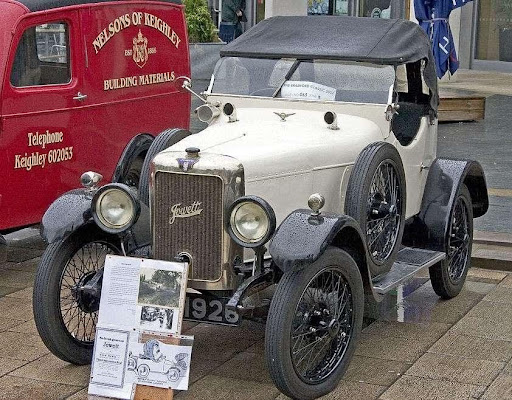
1923 Jowett Sports – Redsimon
Twelve vehicles were made before an improved version with wheel steering was launched in 1913 and a further 36 were made before the outbreak of World War I, when the factory was turned over to munitions manufacture.
Jowett Cars Limited was a new private company formed in June 1919 to make and sell motorcars, built in a larger factory. The 1920 Jowett Seven had an enlarged, 831cc, version of the pre-War flat twin and it was further enlarged to 907cc in 1921. The larger engines took advantage of the newly announced seven-horsepower RAC rating. All Jowetts, including light lorry derivates, were Sevens until the introduction of the four-cylinder engine in 1936.
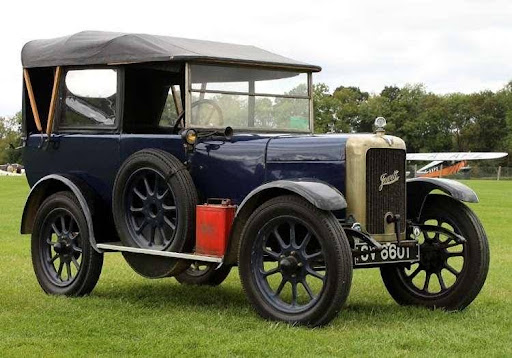
1926 Jowett Short-Chassis Tourer – Shuttleworth Collection
In 1923 coil ignition and electric starting were added and the four-seater ‘Long Four’ was introduced as an additional model to the short-chassis two-seater. The four-seater was initially released in tourer form and was joined in 1925 by a closed saloon model.
In 1926, two Jowetts, named ‘Wait’ and ‘See’ crossed the centre of Africa, covering 3800 miles in 60 days. Jowett had accepted a challenge issued by Frank Gray, the former MP for Oxford, to build a car that was capable of crossing the ‘uncrossable’ heart of Africa, from the Atlantic coast to the Red Sea.
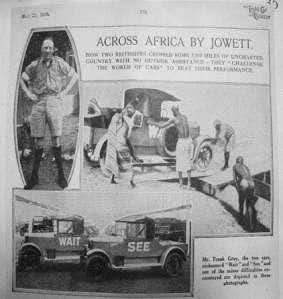
Jowett sold Mr Gray and his fellow-explorer, Mr Sawyer, two standard, long-wheelbase Seven two-seaters, fitted with ‘Safari’ bodies in place of the dickey seats. The two cars were christened Wait and See, and set off from Lagos on 16 March 1926, following a route which was largely devoid of roads, mostly over desert and short of water throughout.
For almost half the trip, advance dumps of petrol and supplies weren’t possible, so the cars had to pull loaded trailers in addition to being loaded to the gunwales themselves.
The icing on the cake was freeing a slave girl from desert nomads!
In 1929, Jowetts caught up with automotive progress, adding four-wheel brakes and removable cylinder heads to the specifications.
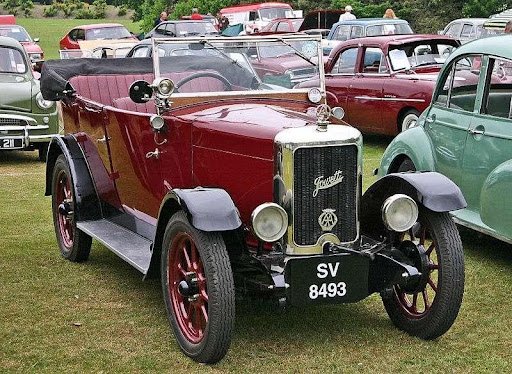
1929 Jowett 7hp Long Tourer – Redsimon
Production was briefly suspended in September 1931, after fire swept through the works, but the factory was soon back in full swing.
In 1933 the Jowett Kestrel was launched, with a four-speed gearbox and in 1935 came the twin-carburettor, Jowett Weasel sports tourer.
Ben Jowett had been busy researching different engine configurations, including a vertical four-cylinder type with an inlet-over-exhaust, F-head. He even built three prototypes for on-road evaluation that were badged ‘La Roche’ for anonymity.
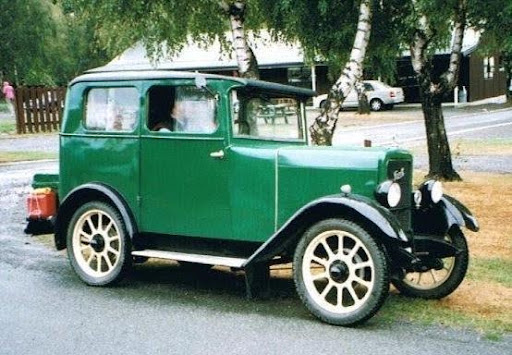
Sid’s 1930 Jowett
However, when the Jowett Ten, four-cylinder engine arrived in 1936 it was a more characteristic flat-four, displacing 1166cc, with induction by twin carburettors.
The traditional twin-cylinder models continued, and the engine grew to 946cc and 8hp (RAC) in 1937.
Ben Jowett retired in 1936 and Willie carried on until 1940.
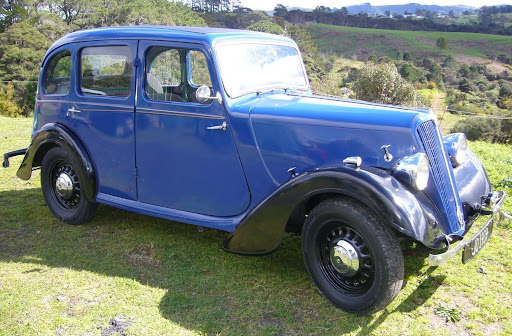
Jowett 8 HP
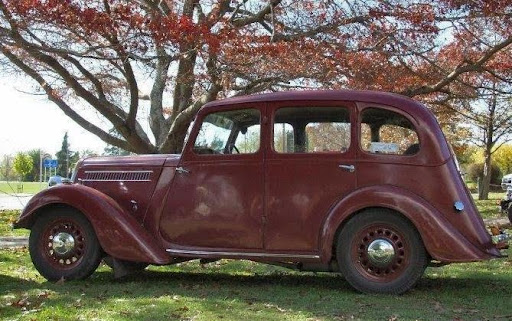
Jowett 10 HP